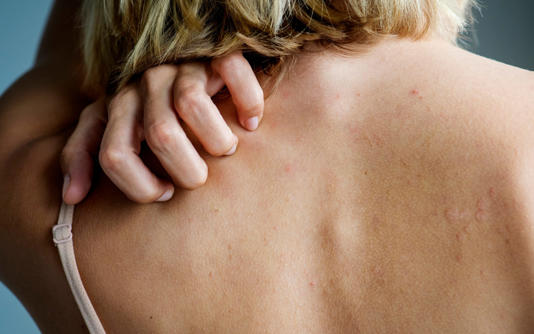
Showing posts with label itch. Show all posts

Sunday, 12 April 2026

Signs Your Rash is Actually Psoriasis

From balconesdermatology.com

Psoriasis is a chronic skin condition that affects more than eight million Americans. However, the symptoms of psoriasis can be similar to other types of skin issues, and it can be difficult to know what’s going on without a professional skin evaluation.

The basics of psoriasis

Psoriasis is a skin disorder that’s triggered by an autoimmune disorder. The immune system dysfunction causes skin cells to develop rapidly. This leads to a build-up of cells on the surface of the skin, which results in noticeable and often uncomfortable side effects.

While the root cause of psoriasis and the immune dysfunction related to it isn’t well-understood, there are known triggers for the condition. You may experience flare-ups due to:

  • Weather changes
  • Skin infections and injuries
  • Exposure to cigarette smoke
  • Use of high blood pressure medications and other drugs

Psoriasis is a chronic disease without a cure. If left unmanaged, psoriasis can increase your risk of developing permanent skin damage. People with psoriasis are also more likely to develop Type 2 diabetes, obesity, and cardiovascular disease.

Additionally, sufferers may be prone to mental or emotional health issues, such as depression, if they feel self-conscious about the appearance of their skin during a psoriasis flare-up.

5 warning signs of a psoriasis flare-up

There are different types of psoriasis that affect adults and kids, and each causes its own distinctive symptoms. However, many psoriasis conditions cause similar symptoms, which can also be confused with rashes and other skin conditions.

Here’s an overview of some common symptoms of a psoriasis flare-up: 

1. Dry, thick skin patches

Dry patches of skin that become thick and sometimes appear raised from the skin are hallmarks of plaque psoriasis. These patches, known as plaques, may start small, but they can grow together and create a larger plaque.

Plaques can develop anywhere on the body, but they’re more common on the lower back, scalp, knees, and elbows.

2. Silvery, scaly skin

Plaques that appear silver in colour or have a white coating are also hallmarks of plaque psoriasis. If you have very light skin, the scales may be pink or red in colour. On very dark skin, plaques may be brown or purple with grey scales.

3. Persistent itching

Plaques are often itchy, which causes many people to scratch the areas. However, scratching could make the plaques grow thicker and cause skin damage.


Itchy skin is a common symptom of plaque psoriasis and erythrodermic psoriasis.

4. Red bumps

Guttate psoriasis is a lifelong condition that causes the sudden appearance of red bumps. Bumps usually form on the torso and limbs, but they may also affect the scalp, face, and ears. They can last for several weeks or months before clearing.

5. Pus-filled bumps

Pustular psoriasis is a rare condition that causes pus-filled bumps to develop on widespread areas of the skin. Often, the bumps break open and leak within 24 hours of forming. The skin then becomes very dry and begins to peel, revealing the smooth skin beneath. The cycle typically repeats within a few days or weeks.

https://www.balconesdermatology.com/blog/signs-your-rash-is-actually-psoriasis 

Saturday, 5 July 2025

A Few Self-Care Tips to Manage Psoriasis Itch and Scaling

From psoriasis.org

Pair these self-care tips with proper treatment to feel more in control of your skin 

If you’re reading this, chances are you know the relentless itch and the troublesome scaling of psoriasis. About 80% of people with psoriasis experience itching, and up to 90% say these symptoms affect their quality of life, from sleep to social activities, according to a study in the Journal of Dermatological Treatment.

The good news: When combined with proper treatment, a little self-care and self-love can go a long way toward managing psoriasis itch and scaling. Here, we’ll explain why these symptoms happen and steps to get some much-needed relief.

Why Does Psoriasis Itch and Scale?

Understanding what’s happening in your body can help make sense of these frustrating skin symptoms.

The science behind the itch

Itch is a major part of psoriasis. It’s even in the literal meaning of the word – “psora” means “itch” in Greek – and yet this symptom is often overlooked and underappreciated.

When it comes to psoriasis, itch – which is called pruritus in the medical community – is more than dry skin. According to a study in the International Journal of Molecular Sciences, the exact mechanisms that make skin affected by psoriasis so itchy are unknown, but we do know the process involves the activation of nerve fibres peripherally (on the outside of the body). The itch of psoriasis is most often associated with the area of the lesions, and often, the more a lesion is scratched, the more severe the itch becomes.

This itch-scratch cycle can also be psychological. Triggers like stress, anxiety, or even seeing someone else scratch can play a role. (Hopefully, reading this isn’t making you itch more!).

Why scaling happens

Scaling happens because psoriasis speeds up your skin’s natural renewal process, shortening the time it takes for skin cells to regenerate, causing them to pile up and form thick, dry, flaky scales that can crack and feel itchy.

How to Ease Psoriasis Itch and Manage Scaling

Pair these self-care strategies with your prescribed treatment plan to help ease your discomfort.

Don’t scratch, distract yourself

We know – it is so much easier said than done. Yet scratching never satisfies the itch, and it can lead to open wounds, raising your risk of infection.

Instead, try redirecting your attention by:

  • Applying a cold compress for a few minutes.
  • Going for a brisk walk.
  • Doing some gentle stretching.
  • Using a stress ball or fidget toy.
  • Picking up a book or putting on a podcast.
  • Practicing deep breathing.

If night-time itch is a problem, consider wearing cotton gloves to bed and always keep your nails trimmed and smooth.  

Moisturize when it counts

Moisturizing is a key part of any psoriasis self-care routine – and consistency matters. Use a fragrance-free cream, lotion, or ointment after hand-washing or bathing to lock in moisture. For added relief, you can gently pat it onto itchy areas to calm the urge to scratch, as recommended by the American Academy of Dermatology.

When choosing a product, check for the National Psoriasis Foundation’s Seal of Recognition to ensure it's safe for psoriasis skin.

Rethink your shower routine

If long, steamy showers are your go-to, it might be time to adjust your bathing routine. Hot water strips natural oils from your skin and can inflame the surface of the skin. The result? Potentially dry and flare-prone skin.

  • Use warm (not hot) water.
  • Choose unscented, soap-free cleansers.
  • Lather using your hands, not a harsh loofah or washcloth.
  • Shower for under 5 minutes and keep baths under 15 minutes
  • Blot gently with a towel to dry off, rather than rubbing.
  • Moisturize while skin is still slightly damp.

Pay attention to stress

Managing stress is a big part of psoriasis self-care, especially since it’s a known trigger, resulting in skin flare-ups for nearly 90% of people with psoriasis, according to a study in the International Journal of Dermatology. It can also intensify itch and make it harder to cope.

Work with your health care provider to find a stress-reducing technique that works for you:

Focus on healthier habits

Like most, you probably aren’t eating a perfectly healthy diet and completely avoiding alcohol, vaping, or cigarettes; however, small, consistent choices do count when it comes to supporting your skin, so perhaps a bit of moderation or adjustment could help your symptoms? Try one of these to get started:

  • Cut down on processed foods and go for a mostly Mediterranean-style diet with fruits, veggies, whole grains, and healthy fats.
  • Limit alcohol, which can trigger and aggravate psoriasis flares, dry out skin, and even make some medications less effective. Some mixed studies even suggest alcohol can increase psoriasis itch.
  • Skip smoking, tied to more severe disease (more itchy scales) and can worsen related conditions (or comorbidities) like cardiovascular disease and inflammatory bowel disease.

Focused, regular self-care might not stop every flare-up or completely eliminate the itch or scaling, but it can help reduce surface inflammation, soothe skin, and improve your overall well-being. Use these ideas as inspiration and find what works for you and your psoriasis.

https://www.psoriasis.org/advance/self-care-tips-for-psoriasis-itch-and-scaling/

Saturday, 15 March 2025

Why Psoriasis Itches—And How to Stop It

From healthcentral.com

Up to 90% of people with psoriasis experience itch—here’s why it happens and how to find relief, from expert treatments to simple at-home remedies 

Thick, scaly, discoloured patches of skin are a hallmark of plaque psoriasis, the most common form of this chronic autoimmune condition. While not everyone with psoriasis experiences itching, it’s a prevalent and often distressing symptom. “In my experience, most psoriasis patients do itch,” says board-certified dermatologist Debra Jaliman, M.D., who has a private practice in New York City. In fact, research shows that 60% to 90% of people with psoriasis experience itch (also known as pruritus), which the American Academy of Dermatology (AAD) notes can be the most bothersome symptom for many.


Why Is Psoriasis Itchy?

So why does psoriasis itch—and why does it happen for some people with the condition, but not others? To answer this, we need to go back to the root cause of psoriasis, which is an overactive immune system that triggers inflammation in the skin, leading to the overproduction of skin cells and resulting in those thick, scaly patches. As part of this immune response, skin cells release inflammatory molecules called cytokines, says Shari Lipner, M.D., Ph.D., board-certified dermatologist at Weill Cornell Medicine in New York City. “These cytokines irritate nerves, and signals get transmitted to the spinal cord (the collection of nerves in the center of the spine that carries messages between the brain and the body), which then results in itch,” Dr. Lipner explains.

One of the cytokines released in psoriasis is interleukin-31 (IL-31), which is associated with inflammation and itchiness. “Patients with a higher level of IL-31 seem to have a higher level of itching,” says Dr. Jaliman. However, research to date hasn’t established the exact role of IL-31 in psoriasis, or a clear link between itch severity and IL-31 levels in psoriasis patients.

The amount of skin covered by psoriasis and the severity of disease are all factors that can affect whether a psoriasis patient experiences itch (and to what extent), says Dr. Lipner. “These factors cause different degrees of inflammation,” she explains. “For example, someone with thick plaques covering their whole body will generally be itchier than someone with one small patch.”

                                                                                                       GettyImages/urbazon

The location of psoriasis plaques is also relevant, notes Dr. Jaliman. “If you have psoriasis on your scalp or your lower back, where there’s a higher density of nerve endings to begin with, you might be itchier,” she says.

Factors That Worsen Psoriasis Itching

On top of the itching that occurs as part of the inflammatory response itself, other factors can exacerbate psoriasis itch. The following are common itch triggers, say our experts.

Dry Skin

It’s important to keep your skin hydrated at all times and especially when it’s more susceptible to dryness, such as during cold weather. If you’re prone to dry skin, opt for a heavier moisturizing product, such as an ointment or a cream rather than a lotion. “This forms more of a protective barrier between your skin and the environment,” says Dr. Jaliman. With that protection in place, more moisture will stay in your skin to help keep itch (along with other psoriasis symptoms like cracking and flaking) to a minimum.

Stress

The relationship between stress and psoriasis goes both ways—stress can trigger a psoriasis flare, and living with psoriasis can, in turn, increase stress levels. Experts believe that chronic stress overstimulate the hypothalamic-pituitary-adrenal (HPA) axis, a brain-body pathway that releases hormones and chemicals, fuelling inflammation throughout the body.

Weather

According to the National Psoriasis Foundation (NPF), four out of 10 PsO patients who took part in global NPF research chose winter as the season that most aggravates their condition. But, as the Mayo Clinic points out, being too hot can also exacerbate psoriasis itch.

Certain Fabrics

Many people with itchy skin conditions like psoriasis find that they have to dress accordingly. “Wool, mohair, and synthetic materials like polyester and nylon can irritate the skin, which can then cause itching, says Dr. Jaliman. She recommends wearing natural, lightweight, breathable fabrics that won’t cause discomfort, like cotton or silk. And keep your garments loose if you’re having a flare, so that air can circulate and you’re less likely to sweat (which can also add to the itch factor).

Scratching

The temptation to scratch can often be too much to resist, but it can lead to a frustrating itch-scratch cycle that can be tough to break. Keep your nails clean and trimmed and wear cotton gloves to bed if you have a habit of nocturnal scratching. The AAD suggests reaching for your moisturizer whenever you have the urge to scratch (it’s a good idea to have travel sizes of your favourite hydrating ointment so it’s easy to take out with you, wherever you go). Another way to get instant relief from itch is by placing something cool on your skin, like a cold compress. (The nerves that send those “itch signals” to your brain are less effective when they’re cold, says the AAD.)

How to Relieve Psoriasis Itching

The best way to relieve psoriasis itch is to work with a board-certified dermatologist to find a treatment plan that works for you, says Dr. Lipner. “The better managed your psoriasis is, the less you will itch,” she explains.

It’s important to follow the treatment plan that’s right for you—and everyone is different in how they respond to certain medications and therapies. But you might want to consider some of these suggestions from our experts.

Topical Treatments

Many over-the-counter topicals are available to help relieve psoriasis symptoms, including itch. Dr. Jaliman recommends Sarna Anti-Itch Lotion, which contains menthol and camphor to help with itching and CeraVe Itch Relief Moisturizing Cream, which contains pramoxine (a topical anaesthetic) to numb the area. Many skin care products marketed for eczema can also be great for psoriasis (itch is central to eczema), such as Eucerin Eczema Relief Cream, which contains colloidal oatmeal and ceramides to strengthen the skin’s protective barrier.

Corticosteroids (commonly known as steroids) may help to relieve itch as well as reducing irritation and swelling and slowing the growth of skin cells. Stronger formulations are available on prescription, but an over-the-counter option is Cortizone-10 Intensive-Healing Formula Hydrocortisone 1% Cream. A study published in the Journal of the American Academy of Dermatology found that a four-week course of topical hydrocortisone cream applied twice per day reduced the severity of the participants’ symptoms from a Target Lesion Score (TLS) of 8 (severe) to 2 (mild).

Phototherapy

Phototherapy for psoriasis involves regular exposure of the skin to ultraviolet light, typically ultraviolet A (UVA) and ultraviolet B (UVB) rays. Usually done at a doctor’s office or dermatology clinic, it’s been shown to help with itch. One of the benefits of phototherapy is that if it works for you, it usually works quickly: a study published in the Journal of the German Society of Dermatology found that about 50% to 75% of individuals who had UVB light therapy achieved at least 75% or greater improvement from their baseline within four to six weeks.

Systemic Medications

If you have moderate to severe psoriasis, topical treatments might not be enough to keep your symptoms under control. Your doctor may recommend systemic drugs like cyclosporine (Neoral) and methotrexate (Trexall), prescription drugs that work throughout the body, if topical treatments and phototherapy have been unsuccessful. Unlike topicals that you apply to your skin, systemic meds may be taken orally, by injection, or by infusion. By affecting how the immune system behaves, systemic drugs help to reduce inflammation, which eases itch and other symptoms.

Home Remedies

Tried-and-tested at-home ways to alleviate itch include applying aloe vera to affected areas of skin and taking oatmeal baths, says Dr. Lipner. Meanwhile, Dr. Jaliman recommends using a humidifier to help hydrate the skin and replacing hot baths with lukewarm showers. “Use a moisturizer immediately after getting out of the shower to hydrate your skin, and make sure it’s a fragrance-free product as fragrance can dry out and irritate sensitive skin, leading to more itching,” she adds.

Avoiding Triggers

Knowing your personal psoriasis triggers is a big step in figuring out how to manage your symptoms and avoiding itch. For instance, if stress is a trigger for you, practical tips from the AAD include yoga, support groups, deep breathing exercises, and keeping daily gratitude lists.

Itch may be a common psoriasis symptom—and one that’s not always easy to control—but that doesn’t mean you have to let it take over your life. “If your psoriasis itch is making you uncomfortable, interfering with your ability to concentrate or perform your daily activities, disrupting your sleep, it’s important to see your board-certified dermatologist,” says Dr. Lipner.

If you’re experiencing sore joints alongside severe itch, this may be a sign of psoriatic arthritis. And if your itch is intense to the point that it feels like a burning sensation, this may be erythrodermic psoriasis, a rare type of psoriasis that can appear suddenly and may require emergency medical treatment.

Bottom Line

Psoriasis itch can be one of the trickiest symptoms of the condition but there are different ways to manage it—so persevere until you find the right one. Sometimes, managing symptoms involves a combination of medications, treatments, and lifestyle changes—with some trial-and-error along the way! Remember, your dermatologist is there to help you determine the best way forward.

https://www.healthcentral.com/condition/psoriasis/is-psoriasis-itchy

Sunday, 23 June 2024

The six surprising ways to end skin itchiness

From msn.com 

Itching is by far the commonest of skin complaints. Besides the itchy conditions eczema, psoriasis and others, itchy fungal infections of the feet and genitals, I have over the years encountered patients who itch after a glass of red wine, going for a run, having a hot bath, wearing elasticated knickers and similarly unlikely circumstances. 

And yet for all its ubiquity, the mechanisms – and purpose – of itching remains obscure. The instinctive response is to scratch, but to what purpose? The transient relief (indeed pleasure) this affords is more than offset by its prompt resurgence more intensely than before.

The further conundrum posed by itching is that not infrequently there is no obvious explanation – no characteristic rash, no itching-inducing medicines to blame, no signs of jaundice or kidney failure. This is the phenomenon of generalised pruritus (as it is known), the subject of a set of recommendations from the British Association of Dermatologists. 

The medical term for a skin itch is 'generalised pruritus' - Getty© Provided by The Telegraph

Top of the list is the thin, dry, intensely itchy ageing skin of later years – dubbed (if unfortunately) “senile pruritus”. This calls for the generous application of a moisturising emollient together with other measures to prevent evaporation from the surface of the skin – turning down the central heating, a humidifier in the home and regular, short cool showers.

It is necessary too to consider the possibility of a “hidden” cause – iron deficiency anaemia and other blood disorders, an over- (or under-) active thyroid and diabetes. But once these are excluded we are left with Generalised Pruritus of Unknown Origin (GPUO) for which by definition there is no specific remedy. 

Here “the treatment of choice” is an eight-day course of the compound doxepin applied topically. A diverse range of drugs can include antihistamines (cetirizine) or antidepressants such as Prozac – some evidence suggests these can block the effect of histamine. Finally, “expert opinion” favours exposing the skin to bright ultraviolet light (phototherapy) as both safe and effective.

https://www.msn.com/en-us/health/other/the-six-surprising-ways-to-end-skin-itchiness/ar-AA1jt7Vv?item=flightsprg-tipsubsc-v1a/

Saturday, 6 January 2024

7 Ways to Relieve Itchy Skin When You Just Can’t Stop Scratching

From self.com

Good news: You’re not doomed to paw at yourself forever 

When you develop a terrible itch somewhere on your body, it’s nearly impossible to think about anything else. You can’t sleep. You can’t focus. Must scratch. is the only thing registering in your brain. You know giving in to the urge will only make it worse—so what can you do to actually get relief?

There are a lot of treatments out there, and your approach may depend on what’s causing the itch, its severity, and how long it’s been happening. Sometimes the source of the problem is crystal clear, like the mosquito bites you racked up on a recent hiking trip. Other times, it’s a little harder to pin down and you may need a doctor’s help to make that annoying feeling go away.

Kimberly Shao, MD, a board-certified dermatologist at Dayton Skin in Dayton, Ohio tells SELF you should definitely see a doctor if you have a full-body itch, other problems like blisters and swelling, or if it’s messing with your ability to do everyday stuff, like getting through the workday or sleeping at night. If your symptoms last longer than two weeks and the cause is unclear, a dermatologist can determine if you have a condition like eczema or psoriasis.

However, if your symptoms aren’t as dire—and probably due to a temporary problem like insect bites or dry skin—you can try these expert-recommended tips, which are generally safe and effective for treating the most common causes of itchy skin.

                                                                            CSA-Printstock/Getty Images

1. Choose the right moisturiser

Dr. Shao says dermatologists have a favourite saying: Dry skin is itchy skin. That’s why choosing a good moisturizer—and using it often—is often a first step to reducing the urge to scratch, she notes.

Typically, moisturisers contain at least one of three different types of ingredients: emollients, occlusives, and humectants. Emollients are oils and lipids that relieve dry, itchy skin by filling in the gaps between the skin cells, sort of like the mortar between bricks. Popular emollients include shea butter, aloe vera, and ceramides. Occlusives, like petroleum jelly or beeswax, are designed to help lock in moisture, while humectants, such as glycerine and hyaluronic acid, attract and retain moisture. Dr. Shao says you’ll want to choose a product that contains more than one type of ingredient, if possible, like CeraVe’s Healing Ointment. (Check out our list of the best eczema creams for other good options.)

If you have sensitive skin, opt for a moisturiser labelled as hypoallergenic, Dr. Shao adds, as it’s less likely to trigger an allergic reaction. It’s also not a bad idea to avoid moisturisers with fragrances and ethanol (a type of alcohol often found in skin care products), as both can be drying and irritating.

2. Moisturise strategically

Picking the right moisturiser is only the start; you also need to be strategic when applying it. Plan to slather it on your skin as often as possible throughout the day (ideally three to four times if you can swing it!) and right after washing your hands, per the American Academy of Dermatology (AAD).

You should also moisturise within five minutes of getting out of the shower, and no more than 10 minutes tops—any longer and you risk drying out your skin even more. Also, use lukewarm and not hot water, as high temps can strip your skin of moisture. Pat yourself dry instead of rubbing with a towel, as the latter approach can irritate your skin. (As an added bonus, patting will leave your skin a little damp, which is ideal, because then your moisturiser can help seal in that hydration.)

3. Take a colloidal oatmeal bath

If you haven’t jumped on the colloidal oatmeal train for your skin, now’s the time, Joshua Zeichner, MD, associate professor at the Icahn School of Medicine at Mount Sinai in New York and director of cosmetic and clinical research in dermatology at Mount Sinai Hospital, tells SELF. “Oats contain anti-inflammatory compounds, known as avenanthramides, that have antioxidant and soothing effects on the skin,” he notes. “Oatmeal compresses and baths have long been used to soothe dry, itchy skin.”

You can find colloidal oatmeal in many over-the-counter (OTC) moisturizers. You can also whip up your own skin-calming DIY bath using colloidal oats from your local pharmacy or drugstore, Dr. Shao says. Here’s how to do it, per the AAD: Add the oats to a warm bath and soak for 15 minutes. Pat yourself dry after, and add a layer of moisturizer on top.

If cleaning sticky oatmeal out of your tub sounds like a potential nightmare, know that colloidal oatmeal is a finely ground version of the type you’d typically eat, so it should dissolve in water and go down the drain easily too.

4. Chill out with a cold compress or wet wrap

When you hurt yourself and feel an immediate, throbbing pain—for example, after slamming your finger in a door—applying something cold to the affected area can provide temporary relief. That same logic applies to an insatiable itch, which is caused by an over-firing of nerves in the skin, Dr. Zeichner says—which is why placing a cool compress on irritated skin can help combat the urge to scratch.

Place an ice pack or cold compress on your skin for up to 10 minutes to help ease that feeling, according to the AAD. “The cold sensation can have a numbing effect and also help decrease swelling that may be associated,” Dr. Shao says.

If you have a chronic itchy skin condition like eczema, talk to your dermatologist about wet wrap therapy, which involves draping damp cotton clothing or gauze around a particularly itchy spot, putting a dry layer of clothing over it, and leaving the wraps in place for several hours or even overnight, per the National Eczema Association (NEA). (But you should only do this with your derm’s green light, so you don’t accidentally irritate your skin even more.)

5. Use caution with OTC remedies

Over-the-counter creams that contain corticosteroids help suppress inflammation—and can potentially stop your skin from freaking out. One common example you’ve probably encountered before is Cortizone-10, which is often marketed for insect bite relief. “Topical steroids are like fire extinguishers that put out inflammation in the skin, which is how they improve symptoms of itch,” Dr. Zeichner says. Docs often recommend them to people with eczema and psoriasis because they are so effective, according to the AAD.

That said, corticosteroids are meant to be used only for short periods—no longer than a week or two at most—because they can thin your skin or have other serious potential side effects when used for too long. It’s important to chat with a derm before using them, Dr. Zeichner says, and to carefully follow the manufacturer’s directions.

If your skin is itching because of an allergic reaction, an oral antihistamine like Benadryl, Claritin, or Zyrtec may help, according to the NEA. That said, these remedies may not be as helpful if your symptoms are caused by eczema or psoriasis.

6. Try your best to distract yourself.

Try to remind yourself that no itch is worth the scratch—regardless of how good it feels in the moment. That’s because it can set off an “itch-scratch cycle” that can further damage the skin’s barrier, Dr. Shao says.

The good news is that if you can fight that urge for a little while, those feelings might subside. Sasha Heinz, PhD, a developmental psychologist based in Pittsburgh, previously told SELF, “You can think of an urge [to scratch] like a ringing phone. You want to pick it up—you feel compelled to pick it up—but if you let it keep ringing, it will eventually stop. Think about it less as ‘fighting’ an urge, but more as ‘not answering the call’ of the urge.”

There are a few strategies you can use to ignore that “I must claw my skin now” feeling. One option is to create a “distancing ritual” that you can deploy anytime the impulse intensifies: Massage your hands, take a few deep breaths, or just get up and move around—whatever helps you get through that painful moment.

You can also try “habit reversal,” a type of behavioural therapy used to combat repetitive behaviours. Here’s how it works: You identify times you’re likely to be mindlessly scratching without being aware of it (when you’re reading a book or watching TV, for example) and come up with something else to do with your hands (like squeezing a stress ball) to take the place of the harmful habit.

7. Focus on stress relief

As frustrating as painful, itchy skin can be, know that extra stress can sometimes exacerbate symptoms, Dr. Shao says. That’s because your body typically reacts to stress both emotionally and physically—and the physical response may include inflammation, a known trigger for eczema flare-ups, according to the NEA. We know that’s probably the last thing you want to hear, given that stress seems like an impossible-to-avoid fact of daily life. But the reality is that regularly doing things to feel more calm and centred might also help ease your itchy skin problems. What that looks like, however, is really up to you.

You’re probably already aware of activities like deep breathing and meditation to reduce stress, but if you’re already doing that (or you’re simply never going to do that because it’s not your vibe, which we fully understand), there are tons of other options: Make plans to see your favourite friend, log off social media and listen to a chill podcast, get outside and enjoy nature for a few minutes, make crappy but delightful art, have great sex…the list goes on and on.

And while you might not think that a therapist or a support group can help with itchy skin problems, they may be able to address bigger-picture stressors that are making it worse, according to the National Alliance on Mental Illness.

Though it can be exhausting to feel like you’ll be fighting the urge to scratch until the end of time, know that you should see some relief with these tips. If not, reach out to your derm ASAP. They can help you figure out if there’s a more chronic or subtle cause of your symptoms and help you find effective treatments that get to the root of the problem.

https://www.self.com/story/itchy-skin-treatment